
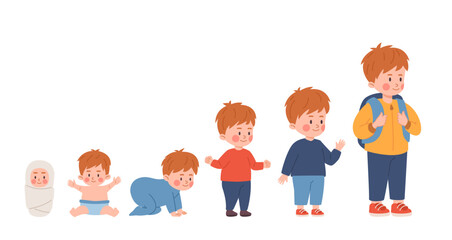
Many have read or heard of the book, “What To Expect When You’re Expecting” by Heidi Murkoff and Sharon Mazel. Great book. I remember reading it years ago and found it helpful. I also remember thinking after having a child, “What do I do now?” and “What am I supposed to expect when my child grows?” As a mother of three, I had many questions along the way, of course.
What I would like to do is share for those parents out there “watching” their kids grow, how to shift this lens into “seeing” their kids grow and start to facilitate their next steps of learning. Here are a few tips for progressing a child into age-appropriate abilities for gross motor skills but also being in the mindset of keeping gauges on fine motor, cognitive, and social communications.
These are points to consider:
- Be truly present in the moments happening. (After reading this blog, of course). Imagine the view your child has when he/she sees you looking at your phone, for example. From a very young age, your child will feel your priorities. Be an active participant, not just a spectator, to really see what your child is learning and doing.
- All kids are different – even your own. Stop (or don’t start) the comparison game. When skills are “supposed” to happen at certain times, be the parent to “create the opportunities” for your child to learn and succeed instead of grading them with their skill.
- How does my child’s neck move? Can my child’s neck turn and tip all directions equally and readily? From 3 months old, your child should be working on lifting their head and chest up while on the tummy. As a parent, create these environments for your child by placing them on their tummy or side and help them reach over for a toy to learn to roll. At 6 months, practice the sounds P, B, and M and turn to look together in a mirror for play.
- How does my child sit? Sitting usually should start to be independent around 6 months of age, but know that it is a work in progress. Again, work on creating the environment to find stability using the core to sit. Let’s consider how a 3, 7, 11, or 16 year old is sitting, too. See their posture and give gentle reassurances of engaging the core to sit tall and be “ready” to read, to eat, to play, to talk, etc.
- How does my child move? Rolling should be starting around 3 months and this gets much better by 6 months. Around 9 months, the “investigation and exploration” begins. Your child may start to imitate you with sounds, start to wave “bye-bye,” and may start to grasp something in each hand and “bang” them together. Between 9 months and 18 months really look for (and facilitate) a LOT of movement. Creeping on all 4’s, to standing up, to standing alone, to walking with 1 hand, to walking independently. Teach safety around stairs to maneuver them, too, by either going down on the tummy or on the bottom by scooting.
- How does my child play? A child who is 18 months may be ready for peek-a-boo while starting to sequence objects in/out of a container and is excited about trying to brush teeth. Around 2 years does your child jump? Around 3 your child should show walking with a heel-to-toe pattern (no more tip-toes). A child who is 5 is learning to hop on one foot, skip, and can ride a bike with training wheels. This 5 year old will really show use of utensils, crayons, scissors, and can learn to tie, button, and zip as well as will play make-believe using his/her imagination.
- Don’t blink – your child will grow up so quickly! Keep your eyes open to SEE your child learning and spend quality time playing together while being an interactive parent.